Managing the Outdoor Cat Population: The Case for Municipal Trap Neuter Return in South Florida


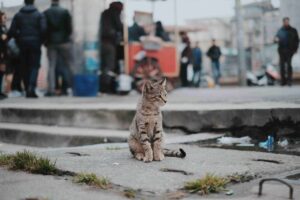
Community cats occupy a persistent place in South Florida life. They range from canal-adjacent neighborhoods in Broward County to dense residential districts in Miami-Dade and the established streets of Palm Beach County.
They are not a single type of animal. They are not a single kind of problem.
Some are fully feral. They are wary of people, settled in a small territory, and dependent on whatever food a caretaker leaves at dusk. Others are lost or abandoned pets that still approach a porch light or a parked car. Kittens appear after warm winters. Ear-tipped adults mark colonies that have already been sterilized. Friendly strays linger near restaurants, warehouses, and residential feeders. The mix changes from block to block. The animals themselves are already part of the neighborhood.
For years the prevailing municipal response was simple. Cities captured community cats and transported the animals to the shelter. That policy never cleared the streets. It only opened space that new animals soon occupied.
A different approach has taken hold across the tri-county region. This approach is trap-neuter-return, or TNR. The case for treating it as ordinary municipal practice rests on two practical claims.
First, a stable colony of sterilized cats can help restrain rodent numbers. It reduces some of the health risks that follow when rats and mice move freely through yards and commercial property.
Second, managing the existing population costs less over time. It is cheaper than repeating the same cycle of collection without changing the number of cats born outdoors.
South Florida’s climate favors both cats and rats. Mild winters allow cats to produce two or three litters a year. Seasonal rains and periodic flooding drive rodents into yards, warehouses, and commercial kitchens.
Rodents in this region are associated with leptospirosis, salmonella, and other infections. These spread through urine, droppings, or contaminated water. After storms, standing water and debris increase the chance that people and pets will meet that contamination.
Cats do not erase rat colonies the way professional trapping or poison can. Field studies show they more often take younger rats than large adults. Well-fed cats hunt less intensively than hungry ones.
Their presence still changes rodent behavior. Rats stay under cover longer and forage less in the open.
Around service alleys, loading areas, and vacant lots, that pressure has practical value. A managed colony is already present, vaccinated, and no longer producing kittens. It functions as a continuous, low-cost deterrent.
It does not replace sanitation or sealed waste containers. It is one element of neighborhood pest control that does not require another application of rodenticide.
TNR is the method that turns that presence into a managed one.
Community cats are humanely trapped, sterilized, vaccinated against rabies, and returned to the same outdoor home. An ear tip identifies animals that have already been through the process. This prevents the same cat from being trapped again and again.
Mating fights and spraying decline. New litters stop arriving in the same bushes and parking strips. Shelter intake falls because fewer kittens are born into conditions they cannot survive without constant human help.
Palm Beach County handles TNR as part of urban animal management rather than as a private hobby, much like neighboring counties do. The value is not theatrical. It is operational.
This approach results in fewer unplanned litters and fewer complaint calls about noise and roaming. It creates a population that can be counted, marked, and kept healthier than an unmanaged one.
The varieties of cats on the ground matter for how the work is done. A truly feral adult belongs outdoors after surgery. A social stray may be a candidate for foster or adoption if space exists. Kittens need a different response than a settled colony of ear-tipped adults.
Caretakers already know which animals eat at which station and which ones will walk into a trap. Municipal programs that ignore those distinctions waste time. Programs that use them spend surgery slots where they change the next breeding season.
Algorithmic and camera-based monitoring is beginning to give cities a clearer picture of those same colonies. Computer-vision camera traps and specialized tracking software can map colony density. They follow movement corridors and record changes in numbers without depending only on a volunteer’s evening headcount.
For South Florida neighborhoods where cats use canals, parking decks, and service alleys, that kind of mapping helps target trapping. It ensures trapping will actually reduce the next round of litters.
A second line of work is aimed at cats that rarely enter a trap. Research groups and animal-welfare consortiums are developing single-dose, permanent injectable or oral chemosterilants. This includes targeted immunocontraceptives that could replace surgery for hard-to-catch colonies.
Those tools are not a substitute for TNR today. They are a way to reach animals that the current trap-and-surgery cycle misses.
The fiscal case follows the same logic. Collecting the same outdoor population year after year does not reduce the number of cats living behind a shopping plaza or along a canal. Sterilizing that population does.
Every litter that is never born is one fewer group of animals competing for limited kennel space and limited volunteer hours. Vaccinated cats present a lower rabies risk to people and pets.
Neighborhoods that once described an expanding cat problem begin to treat the remaining animals differently. They see them as a known and limited presence. There are fewer intact males fighting at night and fewer new kittens under a waste enclosure. The colony can be monitored instead of chased.
The question that recurs in homeowners’ association meetings and municipal workshops focuses on responsibility. Is this a shared responsibility or are others responsible?
The cats are already on the property. Neglect does not remove them. Periodic roundups merely reset the cycle.
Municipal TNR converts an unmanaged population into a managed one. It asks local government to treat sterilization and vaccination as infrastructure. This is comparable to storm drains and mosquito control.
It asks neighbors to report colonies rather than abandon litters at the shelter. It asks those who already feed the cats to continue after the ear tip is applied. An unfed returned cat will wander, and the vacancy will fill again.
South Florida will continue to have outdoor cats. The useful question is what kind of outdoor population a city is willing to live with.
One option is an unmarked, breeding population that grows after every warm season. The alternative is a smaller, vaccinated, identifiable population that hunts rodents, produces fewer new litters, and can be maintained by the people who share the block.
TNR is the method that makes the second option possible. What remains is to support it at the scale the counties require.